
About RMUTI

History of Rajamangala University of Technology Isan: Established under the Rajamangala University of Technology Act B.E. 2548 (9), the rationale behind its establishment lies with Section 36 of the National Education Act B.E. 2542 (9), which stipulates that state educational institutions offering degree-level education shall be legal entities. This allows state educational institutions to operate independently, develop their own administrative and management systems, enjoy flexibility and academic freedom, and remain under the supervision of the University Council. Therefore, it was deemed appropriate to establish nine Rajamangala University of Technology institutions to replace the Rajamangala Institute of Technology, with Rajamangala University of Technology Isan being one of these nine. It is a state higher education institution focusing on vocational and technological studies, with the objectives of providing education, promoting advanced academic and vocational skills emphasizing practical application, conducting teaching and research, producing vocational teachers, providing academic services in science and technology, and preserving arts and culture. Furthermore, it provides opportunities for vocational graduates to continue their vocational education up to the degree level.

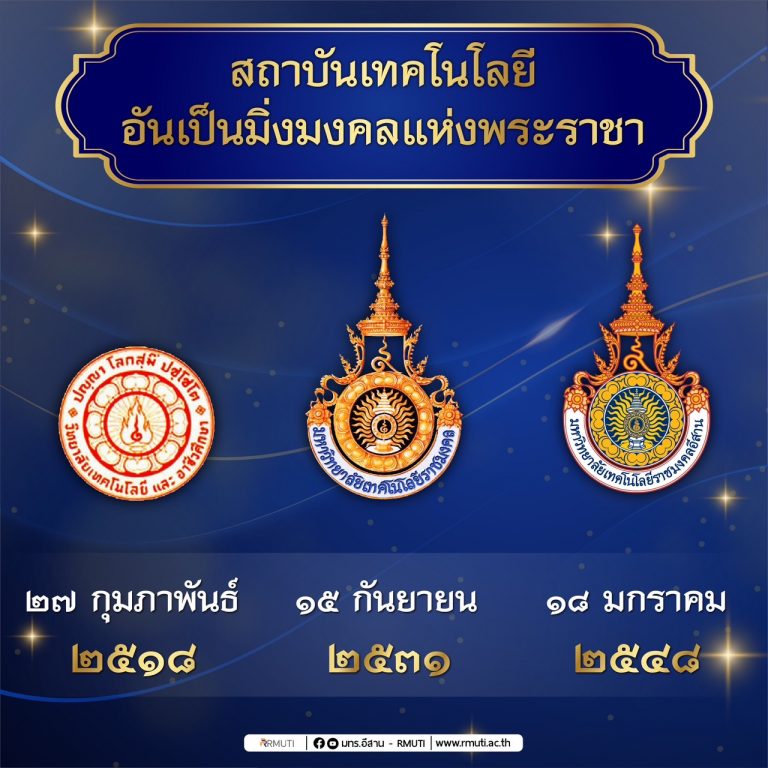
– On February 27, 2518, Institute of Technology and Vocational Education Act was announced on Government Gazette, Special Volume 92, Section 48, Page 1.

– On July 16, 2527, Institute of Technology was offered from The Treasury Department for the land located at Klong 706 th , west side, Klong Luang District, Pathum Thani. The Title deed is 610 consists of 3-41-39 Rai and north Rangsit, Thunyaburi, Pathum Thani which is 109 consists of 3-04-XNUMX for constructing the center of degree education.

– In 2528, There were expending bachelor degrees at campuses.

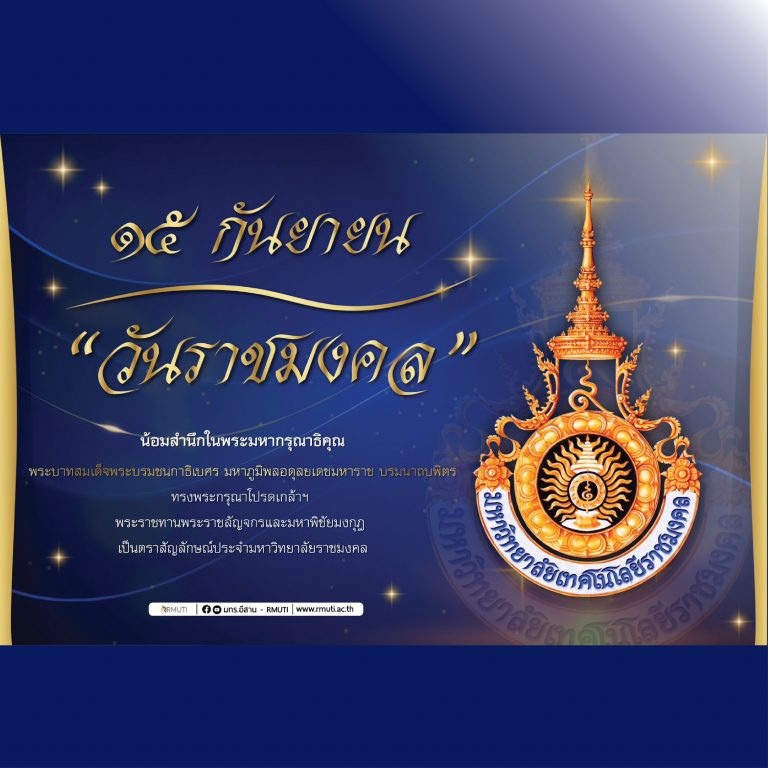
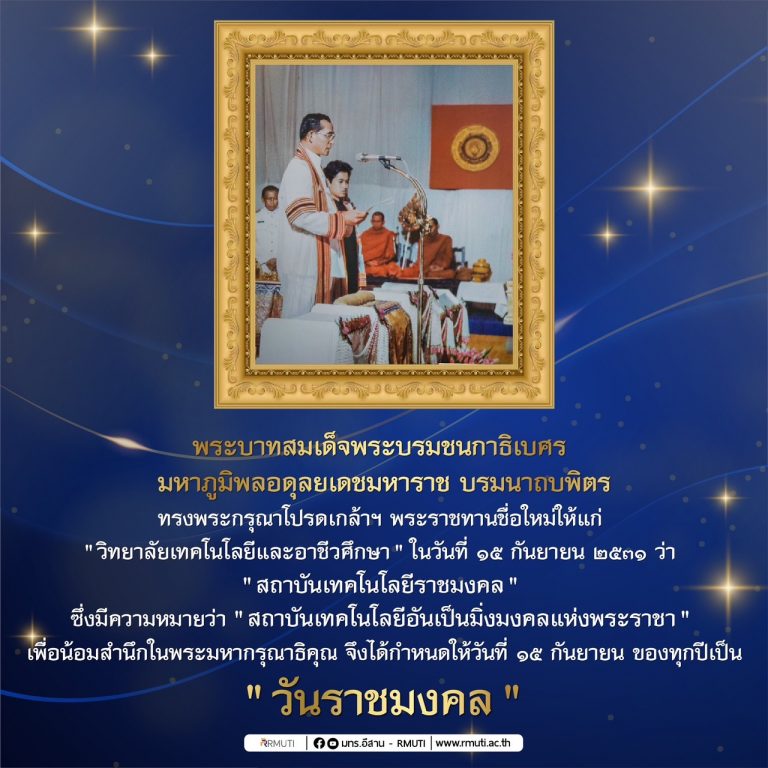
– On September 15, 2531, His Majesty the King Bhumipol Adulyadej bestowed the name of “Institute of Technology and Vocational Education” to “Rajamangala Institute of Technology” and bestowed royal permission to use His Majesty the King royal seal and The Great Crown of Victory to be as an official mark of institute. 

– On January 8, 2548, His Majesty the King Bhumipol Adulyadej signed in Rajamangala University of Technology Act 122 and announced on Government Gazette, Volume 6, Section 18A dated on January 2548, 9. This Act resulted for XNUMX Rajamangala University of Technology. 

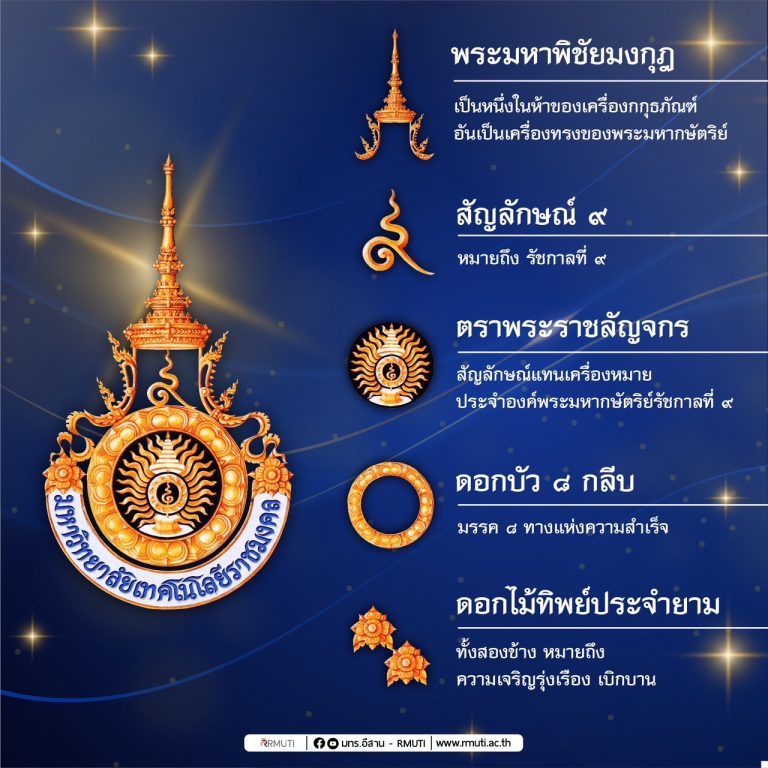
  • Inside the circle is a lotus flower with 8 petals. Surrounding the lotus flower 8 petals represents the path of success, the 8th Path and the freshness and happiness that leads to wisdom spreading in all directions.
  • Under the lotus flower is a royal seal contained, meaning the symbol and insignia of the King Rama IX, whom he bestowed the name "Rajamangala University of Technology".
  • on a circular seal It is covered with Phra Maha Phichai Mongkut and has the number 9 on it, meaning the reign of King Rama 9.
  • The bottom of the circle badge is made to fold a curved frame to support the name "Rajamangala University of Technology Isan", separated from the head end of the frame with floral patterns.
  • Printed on both sides means prosperity, prosperous, bright, joyful.
  • Rajamangala University of Technology means the auspicious university of the King
  • Designed in the shape of a Kasa flower, combined with the letter U (University) and the lines from Can.
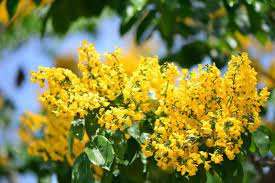
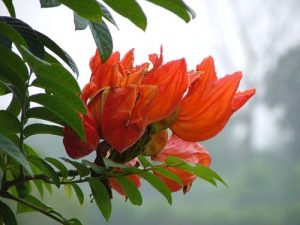
  • The Flame Tree is the official flower of Rajamangala University of Technology Isan.
  • The Kasaed flower has five petals, meaning a united campus.
  • The letter U, standing for University, is composed of five lines, derived from the five-stringed khaen (a type of Thai mouth organ), symbolizing the university's location in northeastern Thailand. These lines all point upwards in the same direction, representing the five campuses moving forward together towards shared educational success for Rajamangala University of Technology Isan.

cassia flower

university flowers 

padauk flower

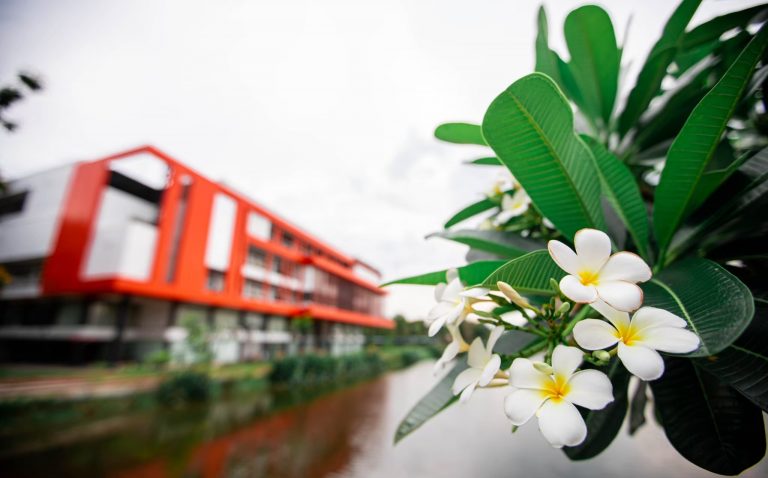
Khon Kaen campus flowers

Slut

Sakon Nakhon Campus Flowers

Chaiyapruek red flowers

Surin campus flowers

Originally, Rajamangala Institute of Technology has designated yellow and blue as the institutional colors

Due to Rajamangala Institute of Technology restructuring according to Rajamangala University of Technology Act, 2548, University of Technology
Rajamangala Isan has set the university colors as follows.

show color
CMYK : C=0 M=74 Y=100 K=0
RGB  : R=254 G=103 B=0

university colors

blue 
CMYK : C=100 M=97 Y=31 K=39
RGB  : R=9 G=20 B=82

Khon Kaen Campus Colors

pink 
CMYK : C=0 M=0 Y=0 K=0
RGB  : R=0 G=0 B=0

Sakon Nakhon Campus Colors

white
CMYK : C=0 M=0 Y=0 K=0
RGB  : R=255 G=255 B=255

Colors of Surin Campus

dark green
CMYK : C=90 M=30 Y=95 K=30
RGB  : R=0 G=104 B=56

Established project colors Roi Et Campus at Thung Kula Rong Hai

Philosophy

Virtue leads, wisdom leads the way, creates innovation.

Determination

build people to jobs technology

Vision

A leader in technology and innovation for sustainable community and social development.

Mission

  1. To create a workforce with knowledge and competencies in each field that are hands-on with Innovationship & Entrepreneurship skills. and skills needed in the future
  2. creative research Innovation and appropriate technology (Appropriate Technology) can be used to benefit various sectors. and create an impact on society
  3. Provide academic services To develop society and communities in cooperation with government agencies and the private sector.
  4. Promote arts and culture local wisdom, cultural capital to add value in the creative economy

RUIs ' core value is "Go for it!"

RBe resilientReady to accept change
UUnityWorking as one team with the organization's goals as its focus
IInnovation FocusFocus on creating innovation
sSocial responsibilityHave social responsibility

corporate culture

“We do it for society”

Identity of Rajamangala University of Technology Isan
“University of Technology and Innovation”

Graduate Identity, Rajamangala University of Technology Isan
“Graduate practitioners with expertise in technology and innovation”

Characteristics of students of Rajamangala University of Technology Isan
(
Student Characteristics)

  1. Creative Thinking and Problem Solving Skill Creative Thinking and Problem Solving Skills
  2. Communication and Social Skill
  3. Integrated Entrepreneurship Skill
  4. Innovative Technology Skill
  5. Social and Community Engagement Skill Social and Community Engagement Skills

Desired graduate characteristics (Graduates desired)
according to the framework of qualifications for higher education

  1. Discipline, honesty and responsible for self, family, profession, society and nation
  2. Have knowledge and learning experience in the field of study Able to work in professional fields in various situations
  3. Ability to think, analyze and be creative using knowledge and experience their own in solving work problems.
  4. have the ability to adapt Teamwork, leadership, self-learning planning
  5. language proficiency and numerical analysis skills as well as being able to use computer technology and information in communication for education and working in the profession

Strategic Issues and Goals

Strategic Issue 1: Transforming Modern Teaching to create highly skilled practitioners Innovators and Entrepreneurs

  • Objective 1.1 Characteristics of university graduates who are highly skilled practitioners, innovators, and have entrepreneurial skills.
  • Objective 1.2 Educational innovations that create graduates according to the characteristics of university graduates, create innovators and entrepreneurs.
  • Objective 1.3 Systems, mechanisms and processes that promote and support the creation of innovators and entrepreneurs
  • Objective 1.4 Resources to support the creation of highly skilled graduates and supporting the creation of innovators and entrepreneurs

Strategic Issue 2: Enhance research and development, creating technologies and innovations for commercialization.

  • Objectives 2.1 Research, creative work, innovation with quality are continuously expanding. and is recognized at the international level
  • Objective 2.2 Research, creative work, innovation has potential to meet the development of 10 targeted industries of Thailand.
  • Objectives 2.3 Systems, mechanisms and processes that promote and support research, creativity and innovation
  • Objective 2.4 Resources to support research creativity Creativity, innovation and development of small and medium enterprises

Strategic Issue 3: Integrating multilateral cooperation both domestically and internationally.

  • Objectives 3.1 Cooperation both at home and abroad in reforming the education management system and manage
  • Objectives 3.2 Partners have confidence and trust in academic management and innovation of the university
  • Objectives 3.3 Systems, mechanisms and processes that promote and support Building cooperation both at home and abroad
  • Objective 3.4 Personnel are knowledgeable, competent and supported in building a network of cooperation both domestically and internationally.

Strategic Issue 4: Transforming organizational management systems to the digital age and linking them to sustainable development.

  • Objectives 4.1 Educational quality improvement for operational excellence/budget management and property maximum benefit
  • Objectives 4.2 Service recipients and stakeholders have confidence and satisfaction with the system Quality of University Management
  • Objectives 4.3 Systems, mechanisms and processes that promote and support administrative reforms to drive the university's strategy.
  • Objective 4.4 Human resources and information technology systems are developed to transform the organization towards the digital age. and drive university clusters

Policy
RIDINGQA

  1. Build readiness for change (Relevance) Policy (Policy)
  2. Build a relationship (love, trust, faith) to the organization (Involvement)
  3. Build commitment, dedication, sacrifice for the organization (Dedication)
  4. Create Entrepreneurial Consciousness (Income Oriented)
  5. Promote and support the creation of a network of cooperation (Networking)
  6. Organize a management system based on the principles of good governance.
  7. Develop quality in all aspects (Quality)
  8. Adhering to the development of leadership at all levels (Accumulated Leadership)
Post Views: 53,691