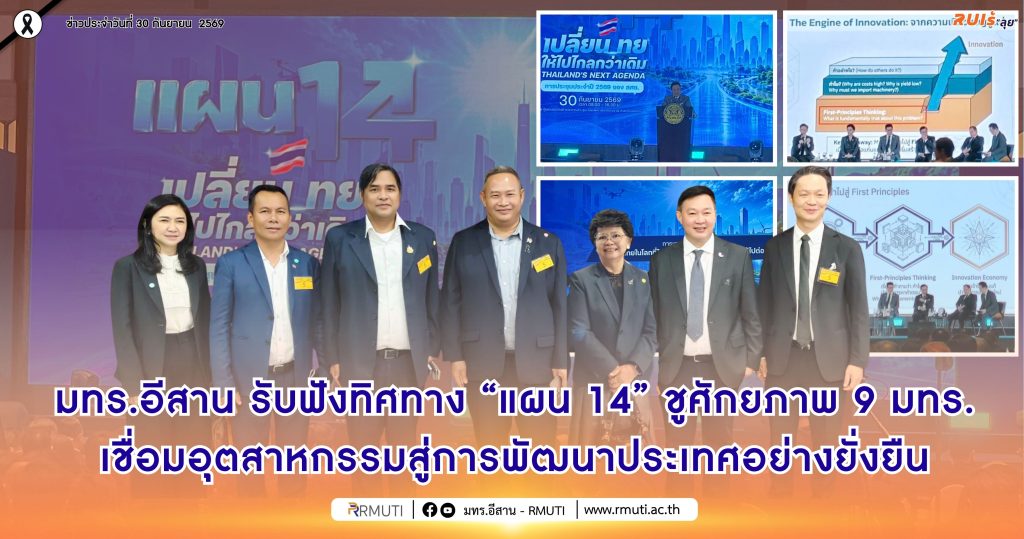
>> RMUTI listens to the direction of "Plan 14: Transforming Thailand to Go Further Than Before." The Rector, in his capacity as Chairman of the Council of University Presidents of Thailand, is confident in the potential of the 9 Rajamangala University of Technology (RMUT) campuses to be a mechanism connecting industry to national development, supporting the NESDB's plan sustainably.
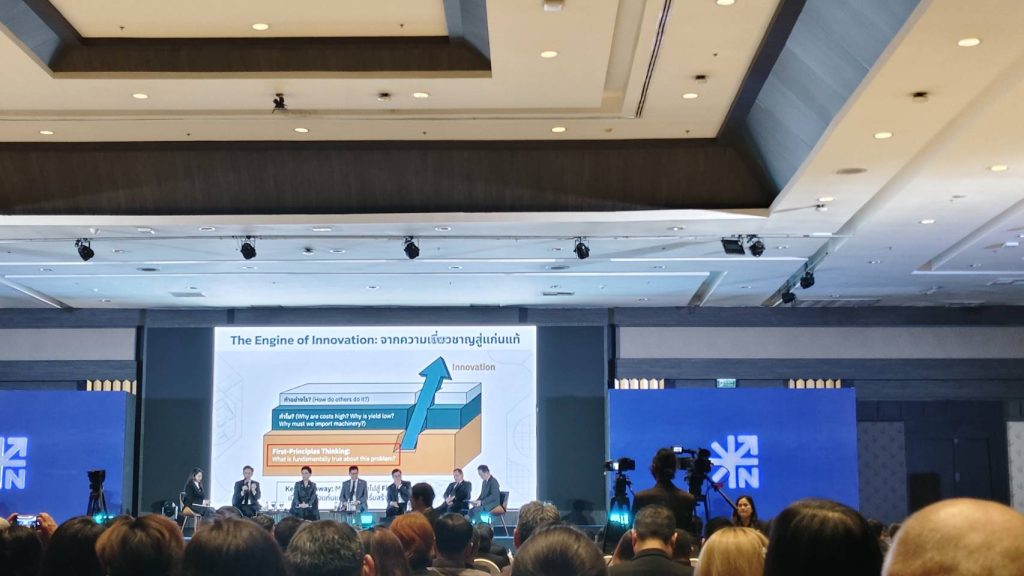
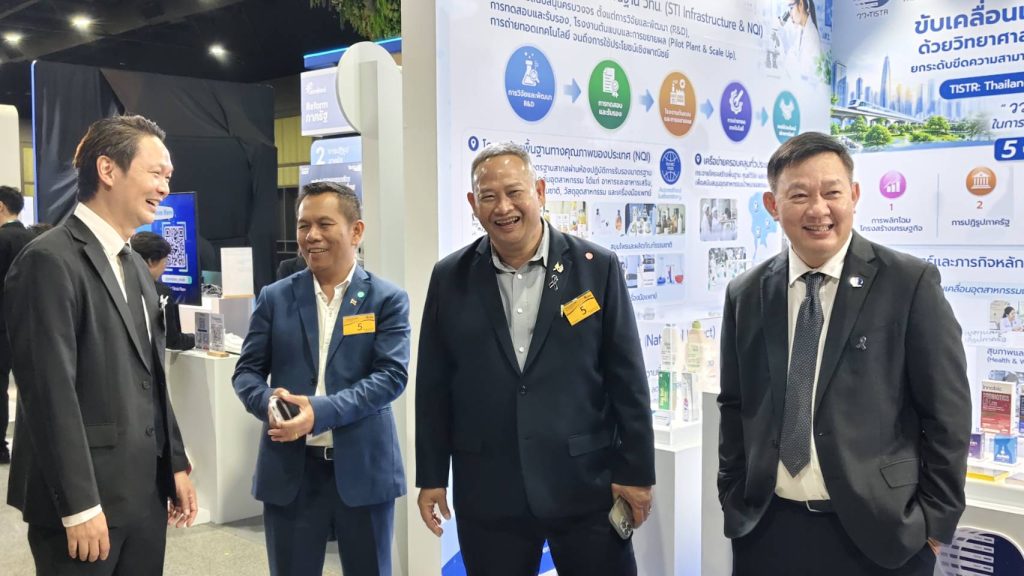
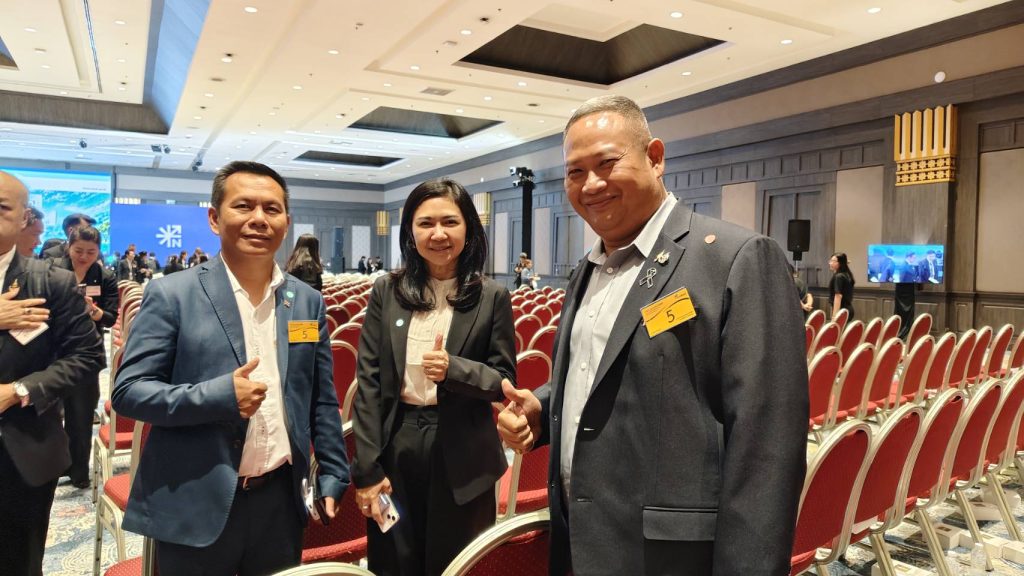
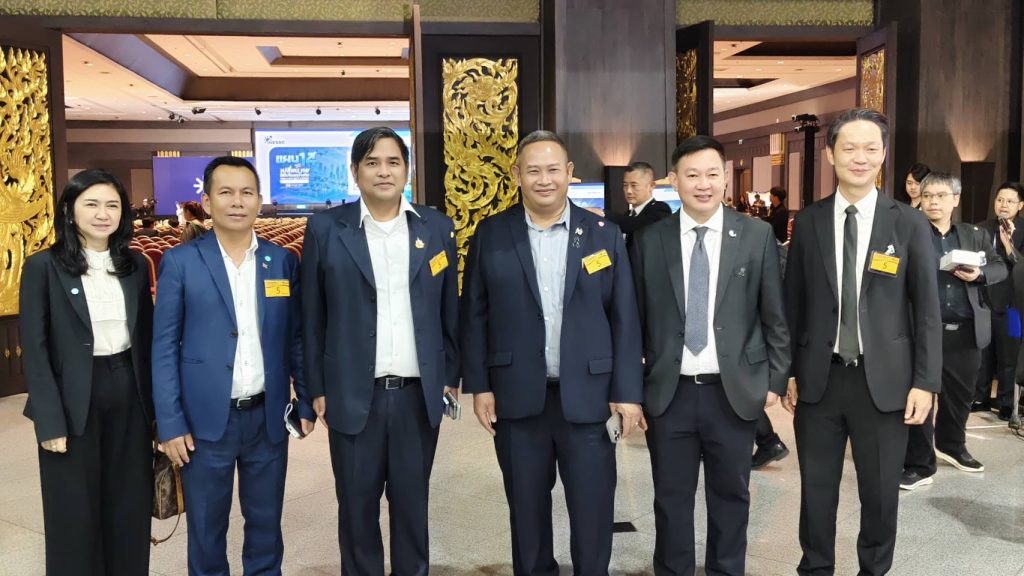
On September 30, 2569, Rajamangala University of Technology Isan, represented by Associate Professor Dr. Kosit Sripootorn, President, and Mrs. Suwannee Khamman, Vice President of the University Council, along with Assistant Professor Dr. Anek Charoenpakdee, Vice President for Strategy, Policy and Planning, participated in and exchanged views at the 2569 Annual Meeting of the National Economic and Social Development Council (NESDC) under the theme “Plan 14: Transforming Thailand to Go Further Than Before - Thailand's Next Agenda” at the Grand Diamond Ballroom, IMPACT Exhibition and Convention Center, Muang Thong Thani, Nonthaburi Province.
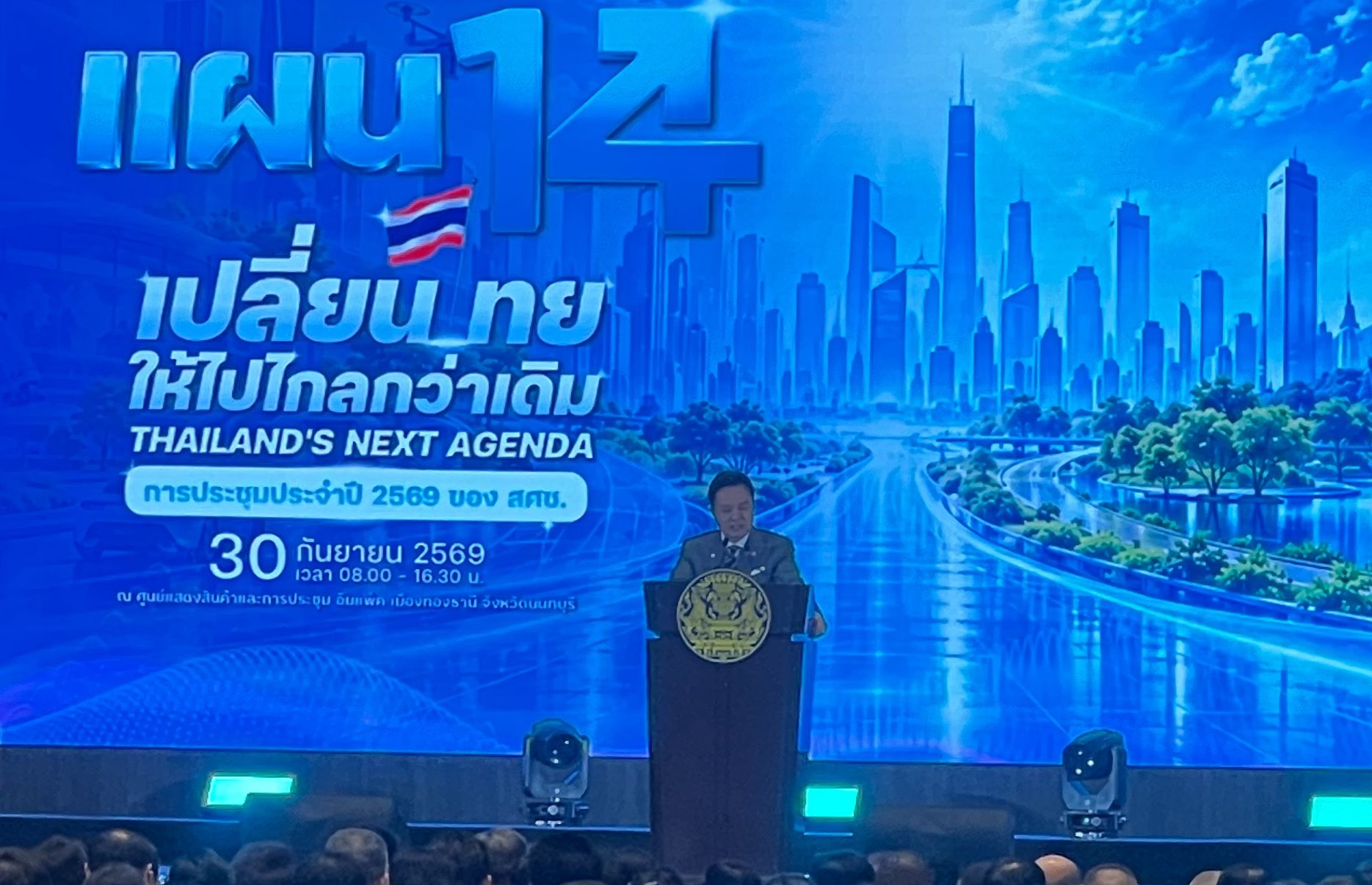
The meeting was chaired by Prime Minister and Minister of Interior Anutin Charnvirakul, who delivered the opening remarks and a keynote address. He presented the direction of the draft 14th National Economic and Social Development Plan (2571–2575 ) , which the National Economic and Social Development Council (NESDC) provided a platform for various sectors to exchange ideas in order to develop a plan that addresses the country's changing needs and drives concrete implementation. The Prime Minister emphasized the importance of "transformation" to enhance the country's potential. In his keynote address, the Prime Minister discussed the changing context facing Thailand and the world in terms of economics, technology, geopolitics, demographic structure, and climate change. The direction of the 14th Plan aims to address structural adjustments and build new capabilities for the country, enabling Thailand to move forward in a rapidly changing global context.
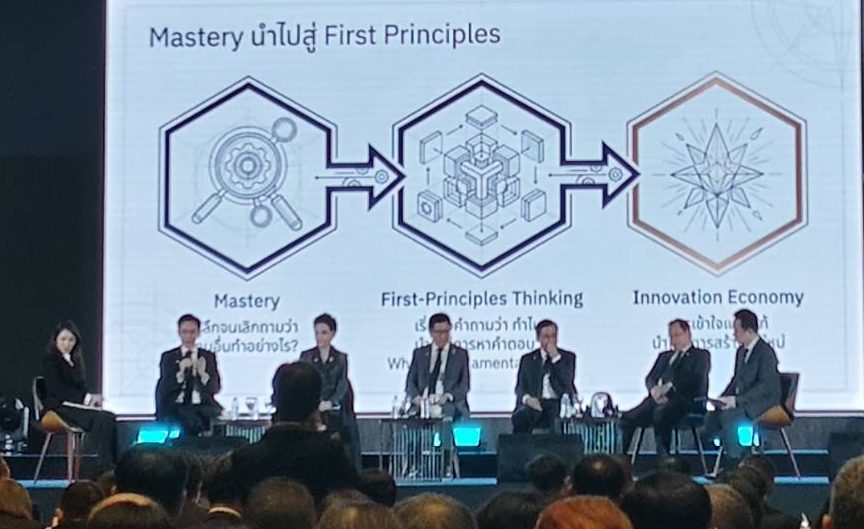
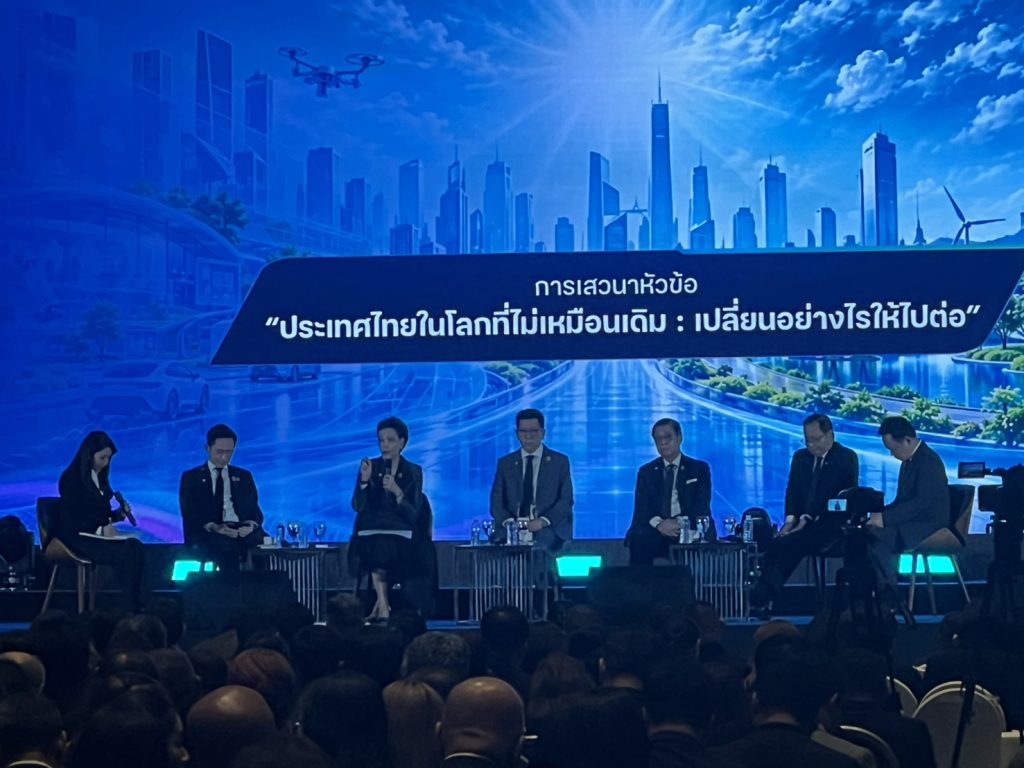
For the seminar on the topic "Thailand in a Changing World: How to Adapt and Move Forward," the Deputy Prime Minister participated in exchanging perspectives on various aspects, including:
- Mr. Ekniti Nitithanprapas Deputy Prime Minister and Minister of Finance Topic: "Transforming the Thai Economy Based on Productivity and Innovation"
- Mrs. Suphajee Suthamphun Deputy Prime Minister and Minister of Commerce Topic: "Enhancing the capabilities of Thai businesses to compete internationally"
- นายสีหศักดิ์ พว้ว Deputy Prime Minister and Minister of Foreign Affairs Topic: "Positioning Thailand to Seize Opportunities in the New World Order"
- Professor Dr. Yotchanan Wongswasdi Deputy Prime Minister and Minister of Higher Education, Science, Research and Innovation Theme: "Building human resources, developing technology, enhancing competitiveness."
- Mr. Pakorn Nilapraphan, Deputy Prime Minister Topic: "Public Sector Reform: Unlocking Thailand's Future Progress"
Meanwhile, Professor Dr. Yotsanun Wongsawat, Minister of Higher Education, Science, Research and Innovation, emphasized the concept of developing “human capital” from the traditional process of developing people to the development of specialized expertise or Mastery. This starts from the potential and strengths of each area, then connects knowledge, technology, and innovation to the country's real-world challenges. This is achieved through the concept of utilizing the potential of each of the 77 provinces as 77 DNA, and the application of Appropriate Technology coupled with strengthening local enterprises.
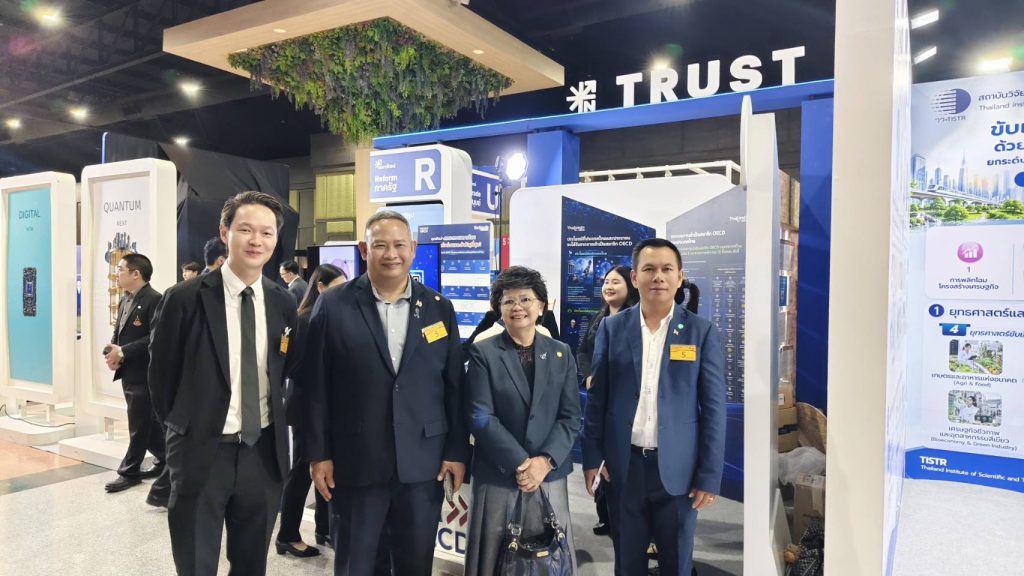
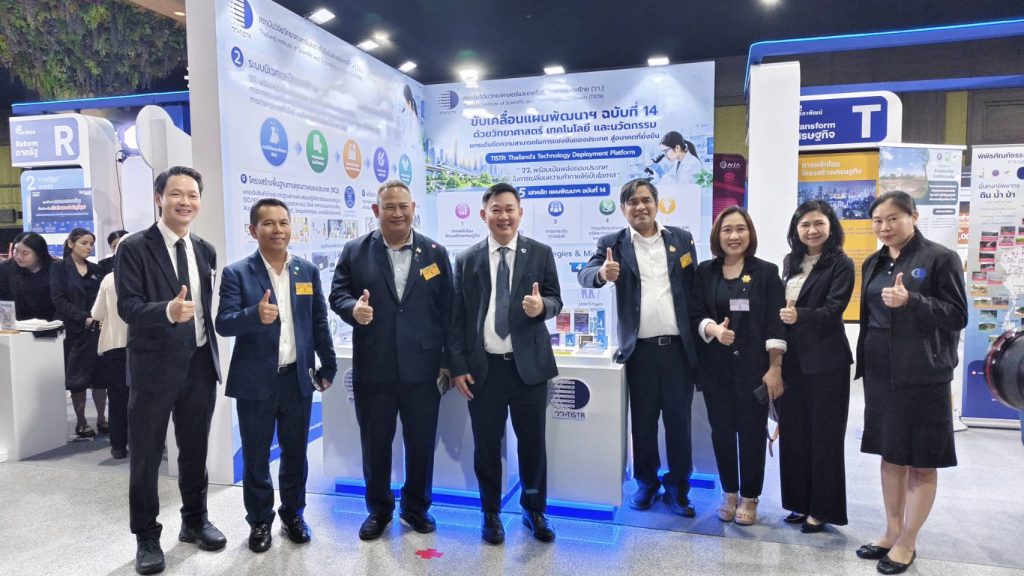
Based on the aforementioned direction, Associate Professor Dr. Kosit Sripootorn, President of RMUTI and Chairman of the Council of Presidents of Rajamangala University of Technology (RMUT), presented during the brainstorming meeting on the development pillars under the draft 14th National Development Plan. He emphasized the role of technology universities in connecting regional potential with national development, particularly leveraging the strengths of each region through education, research, technology, and innovation to produce tangible results at the community, entrepreneurial, industrial, and national levels. RMUTI has continuously driven the network of nine RMUTs in developing research, innovation, and educational standards, as well as connecting universities with industry and external organizations. The aim is for universities to go beyond simply producing graduates, but to become a foundational knowledge and technological infrastructure for the region.
For RMUTI, strategic focuses that can address the direction of the 14th National Economic and Social Development Plan include human resource development in modern automotive and electric vehicles (EVs), transportation and logistics systems, automation and AI, semiconductors, energy transition and green technologies, as well as agricultural technology, food, and adding value to the grassroots economy. This allows for the linkage of knowledge from the university with the specific potential of each province in the Northeast region. This concept aligns with the draft 14th National Economic and Social Development Plan, which defines five pillars of development: economic restructuring, public sector reform, human capital enhancement, sustainable natural resource and environmental management, and transfer and investment in research, technology, and innovation. This approach reflects the university's role as a "creator of people, creator of knowledge, and creator of an innovation ecosystem," connecting the development of specialized skills and expertise to research, technology development, testing, technology transfer, and application in the production and service sectors.
Participating in this meeting was therefore a crucial opportunity for the RMUTI President, in his capacity as Chair of the Council of Rajamangala University of Technology (RMUT) Presidents, to hear about national directions and to synthesize key information to further develop the strategies of the university and the RMUT network. In particular, the focus is on connecting “human capital, technology, and regional potential” into a system. RMUTI aims to leverage its strengths in science, technology, engineering, vocational skills, and collaboration with industry as a foundation for developing human resources and innovation that meets regional needs. At the same time, it seeks to connect the network of nine RMUT universities to jointly promote the potential of technology universities to become a concrete and sustainable part of the national economic development mechanism in the new era.