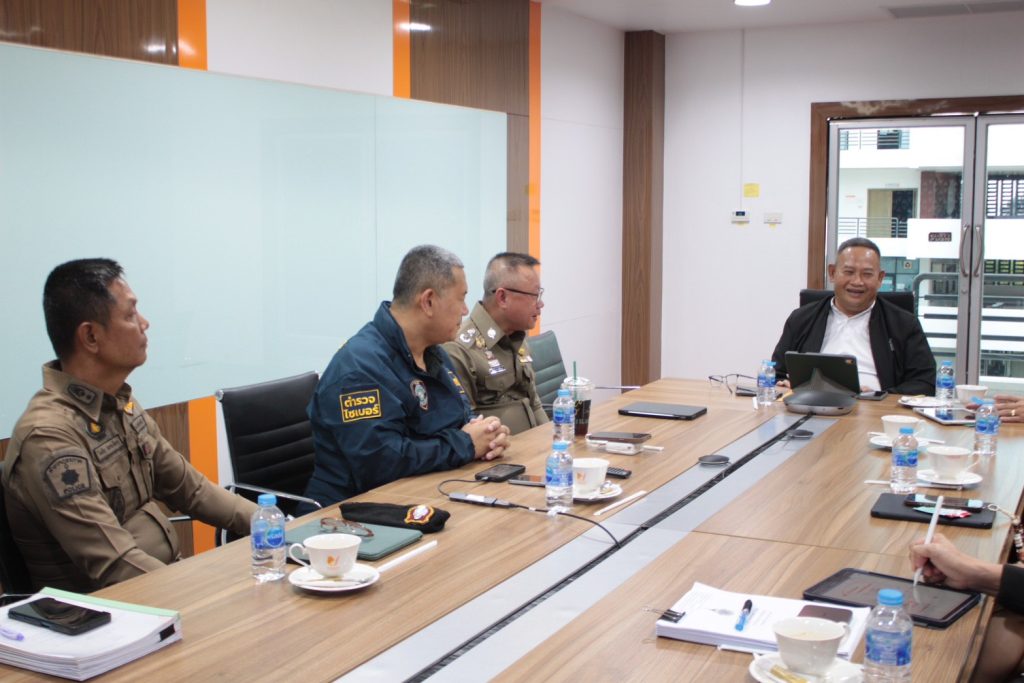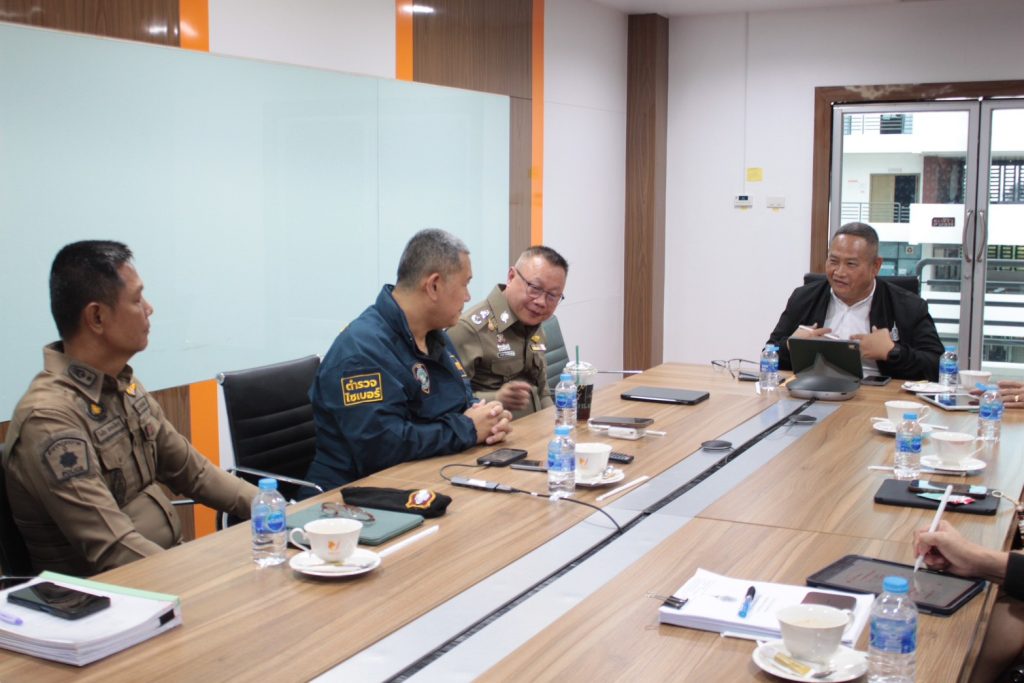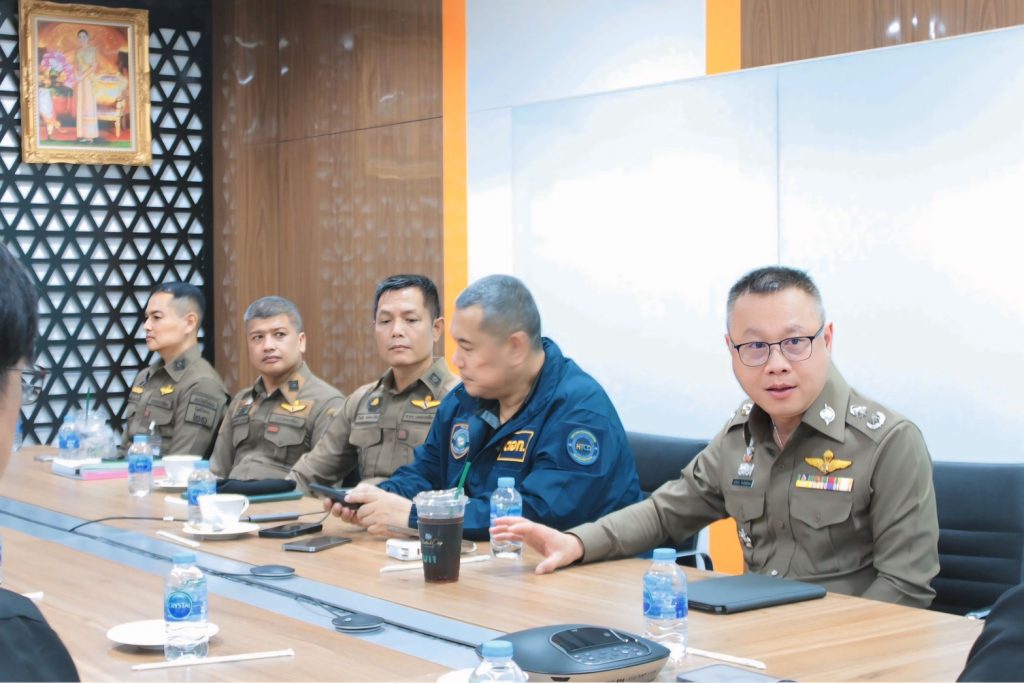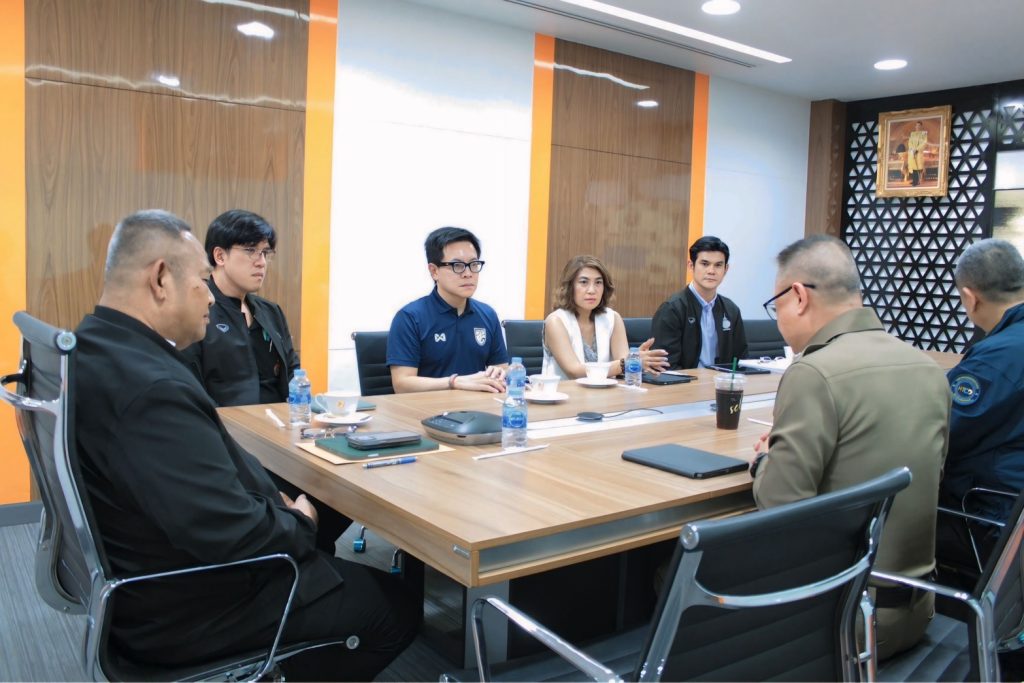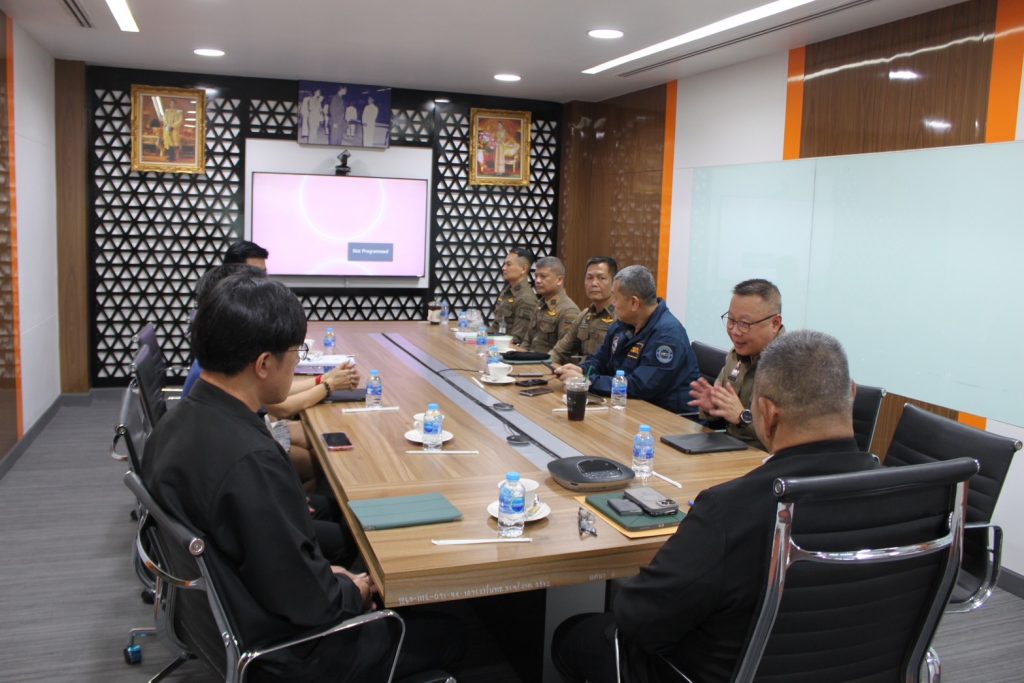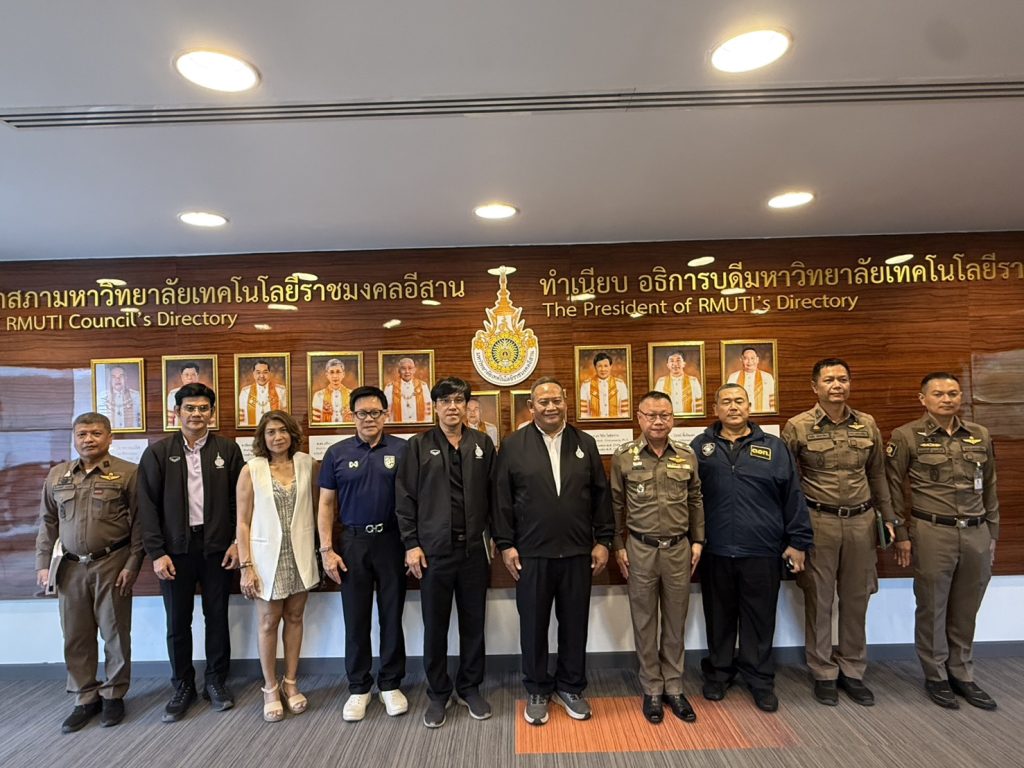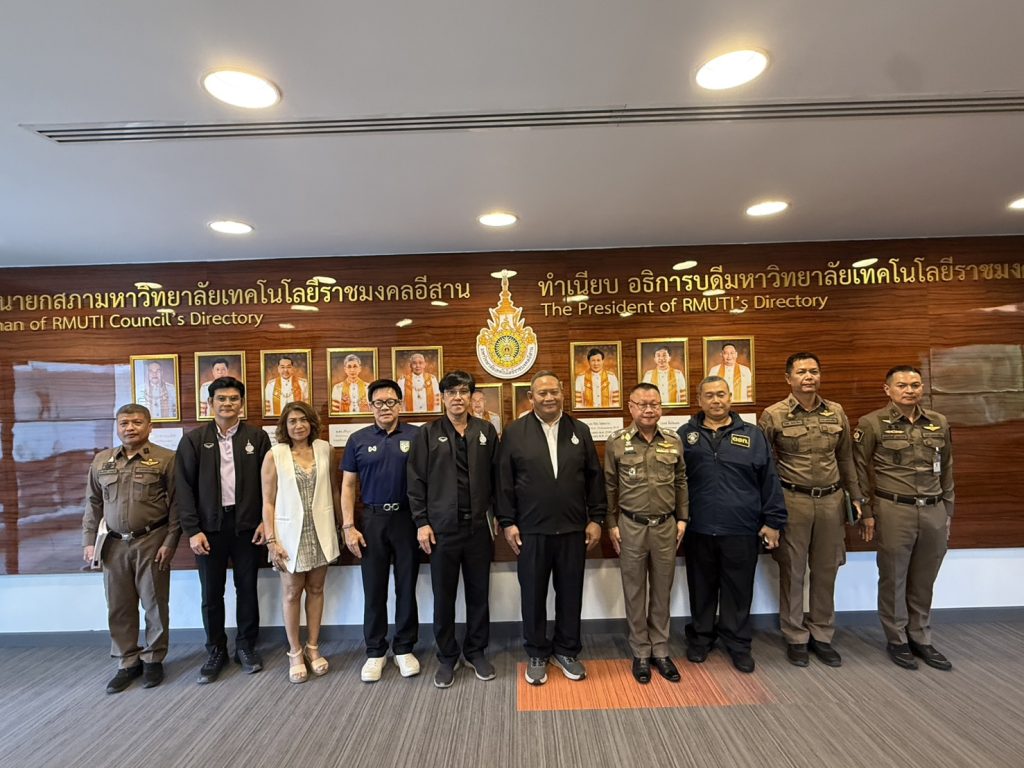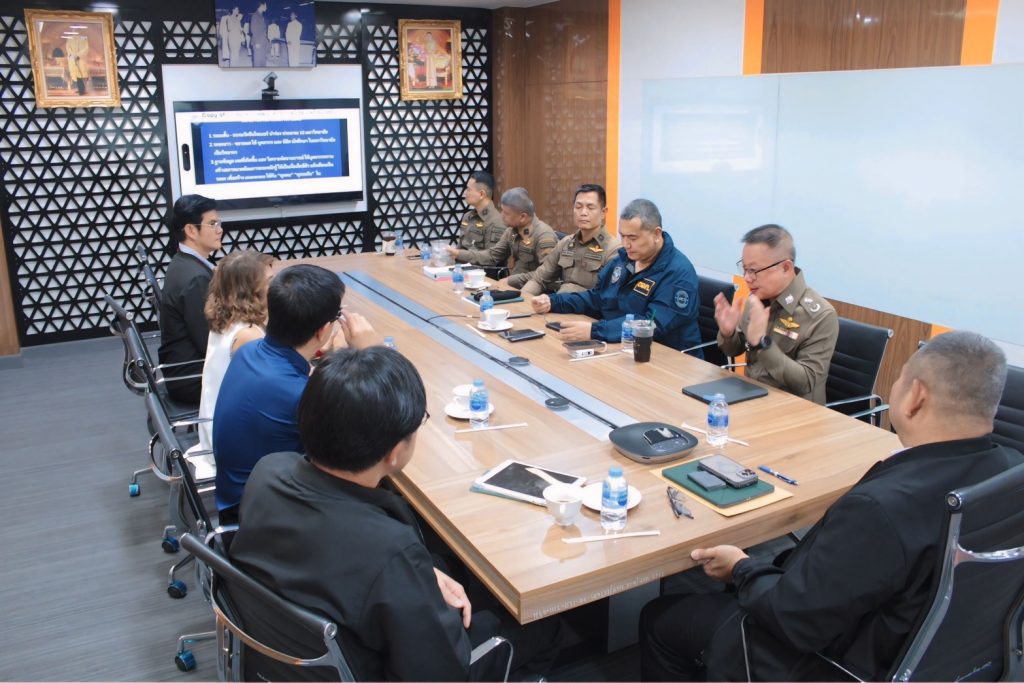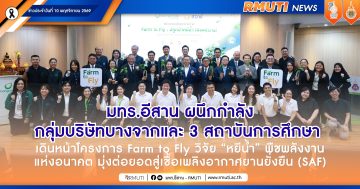
On October 2, 2569, Rajamangala University of Technology Isan, represented by Associate Professor Dr. Kosit Sripootorn, President of RMUTI, held a meeting to discuss cybersecurity with Pol. Maj. Gen. Thanantorn Rattanasittipak, Deputy Commander of the Legal and Litigation Division, Technology Crime Suppression Center, and his delegation. The meeting took place in Meeting Room 5, and was attended by Associate Professor Sorawit T. Siriwatana , Vice President for Student Affairs and Alumni Relations; Assistant Professor Dr. Apichat Tiraprasertsin, Vice President for Digital Technology, Information, and University Council Affairs; Assistant Professor Pornphatsorn Onkird, Director of the Office of Academic Resources and Information Technology; and Assistant President Thanin Rabieppho.
The discussion aimed to exchange ideas on raising awareness about online threats and preventing victims of online fraud. The goal is for students and staff to be able to recognize fraudulent behavior, be aware of impersonations of officials, use digital media cautiously, and be informed of channels for seeking advice and assistance when faced with such incidents. Communicating cybersecurity warnings in an easily understandable and accessible format to students is crucial in building cybersecurity immunity, especially regarding warnings about fraudsters impersonating police officers contacting students via phone or LINE application to trick them into transferring money under the pretext of bail. Students are encouraged to consult their academic advisors or university staff immediately upon encountering any suspicious activity to collectively reduce the risk and damage from online fraud.
Furthermore, RMUTI promotes cybersecurity education and awareness campaigns through its faculty and student leaders. These groups work together to disseminate information and warnings to students effectively, continuously every semester. The goal is for students to stay abreast of evolving scams, protect themselves, and appropriately respond to online threats.