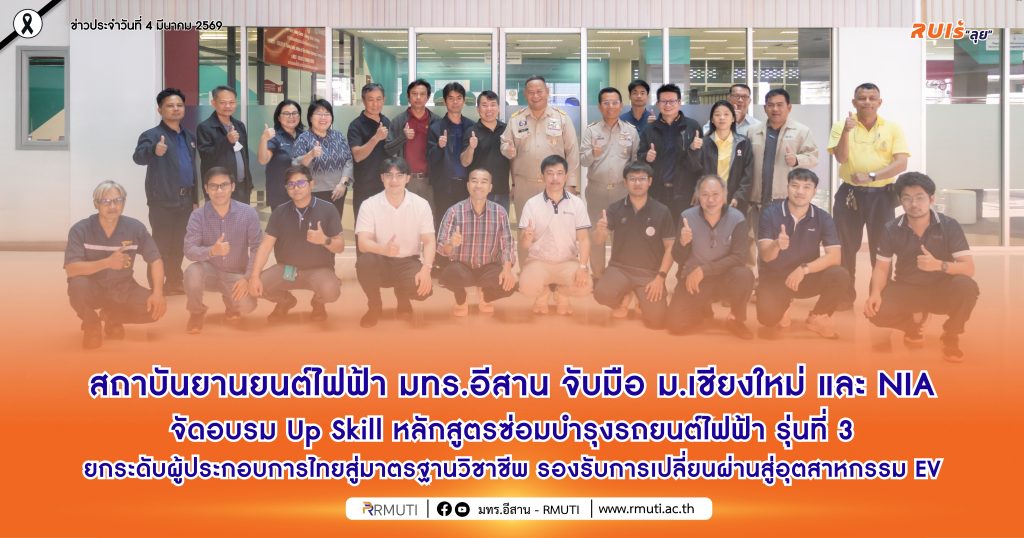
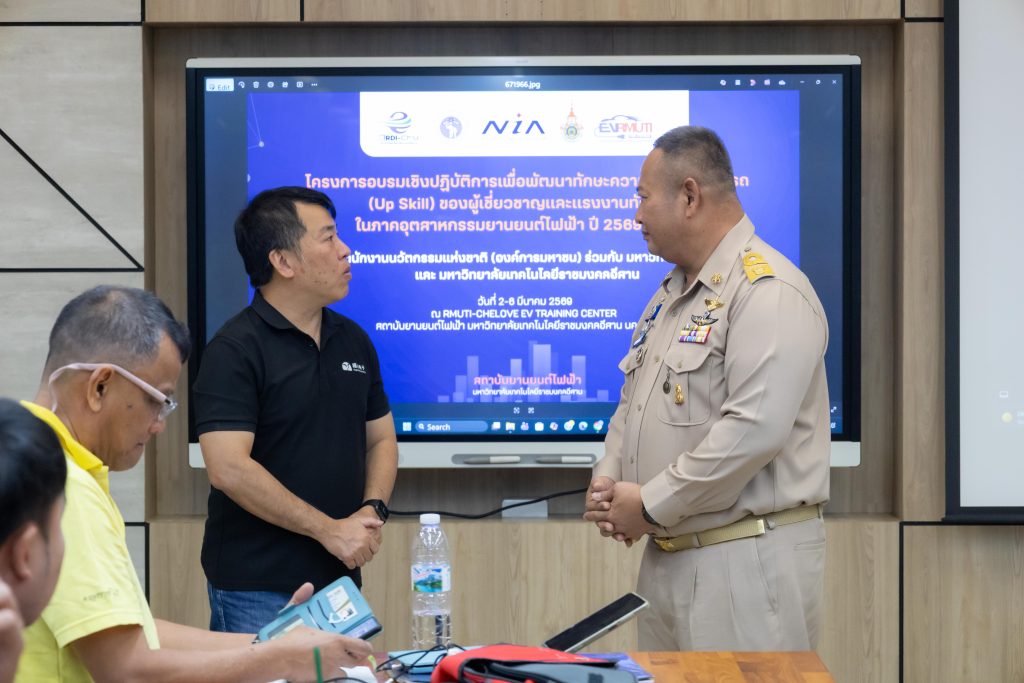
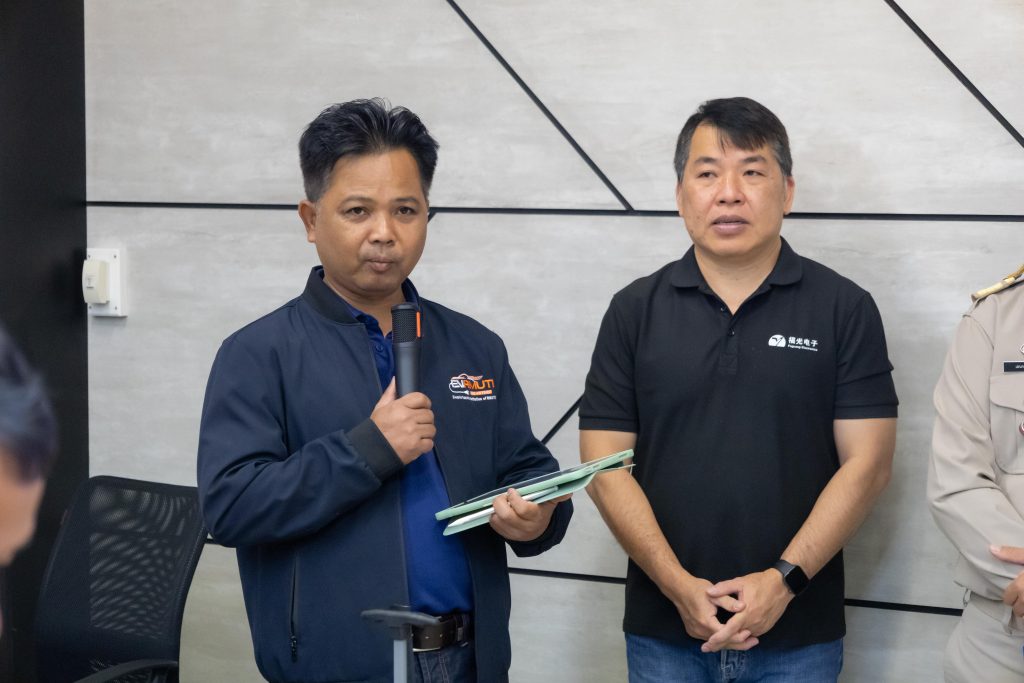
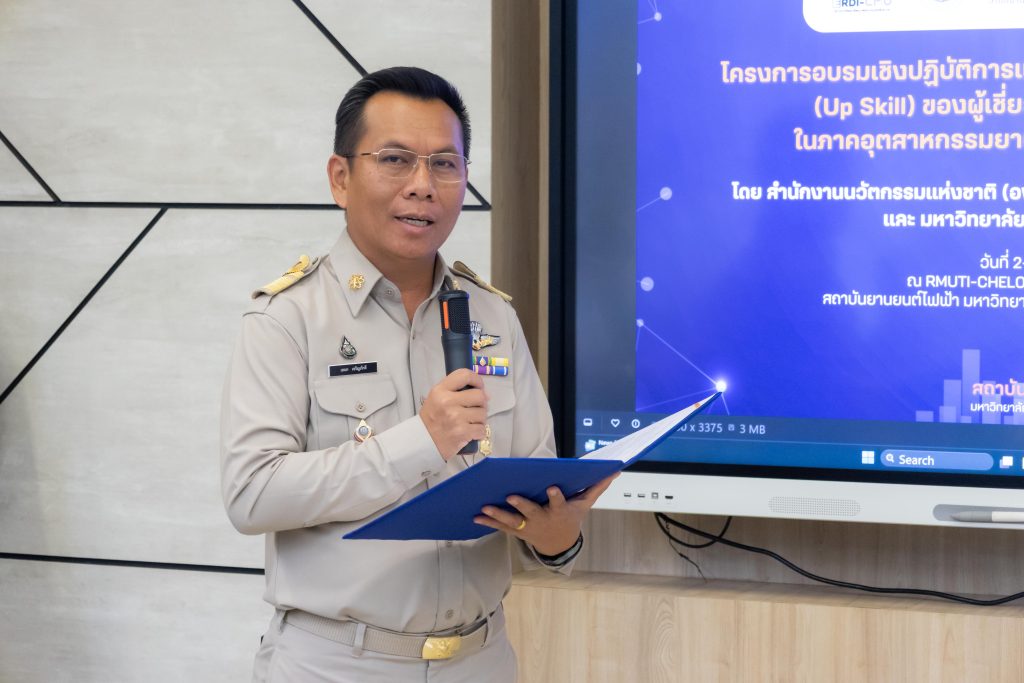
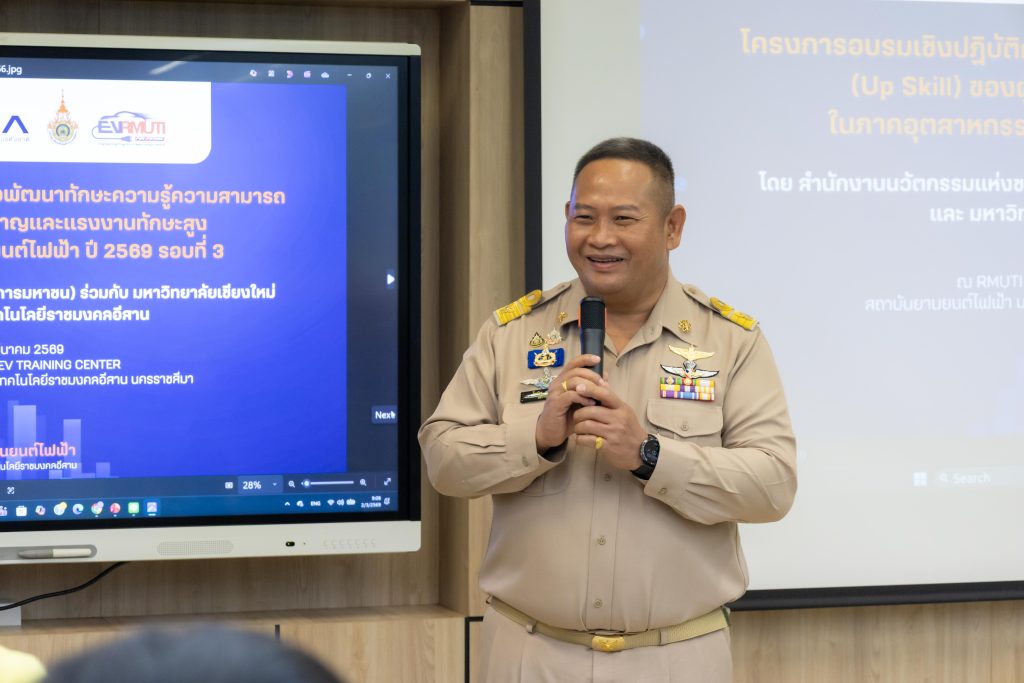
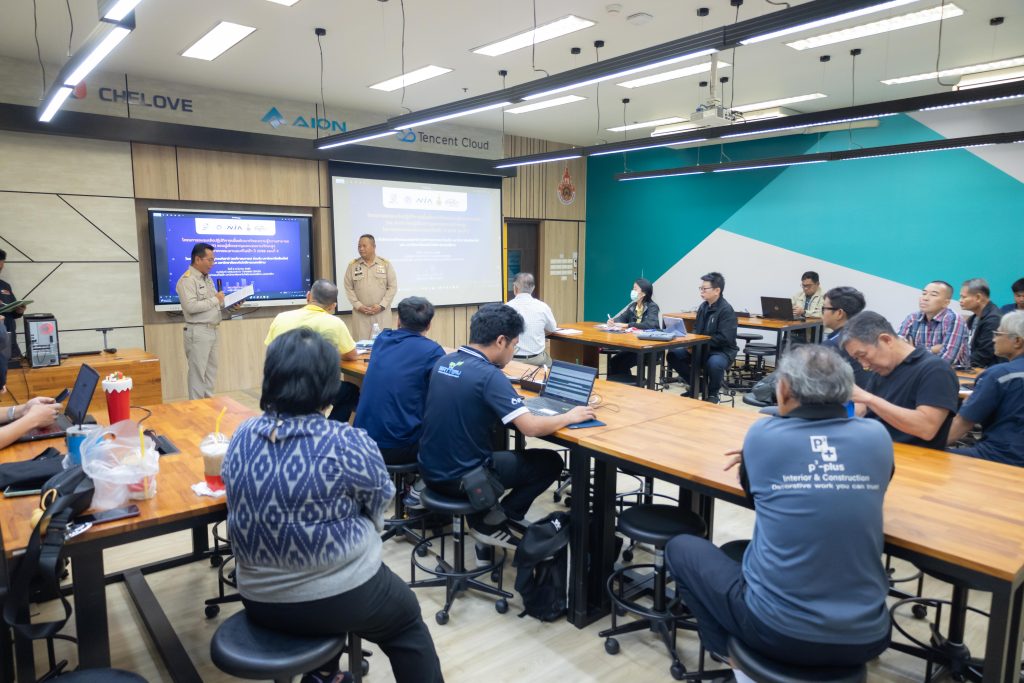
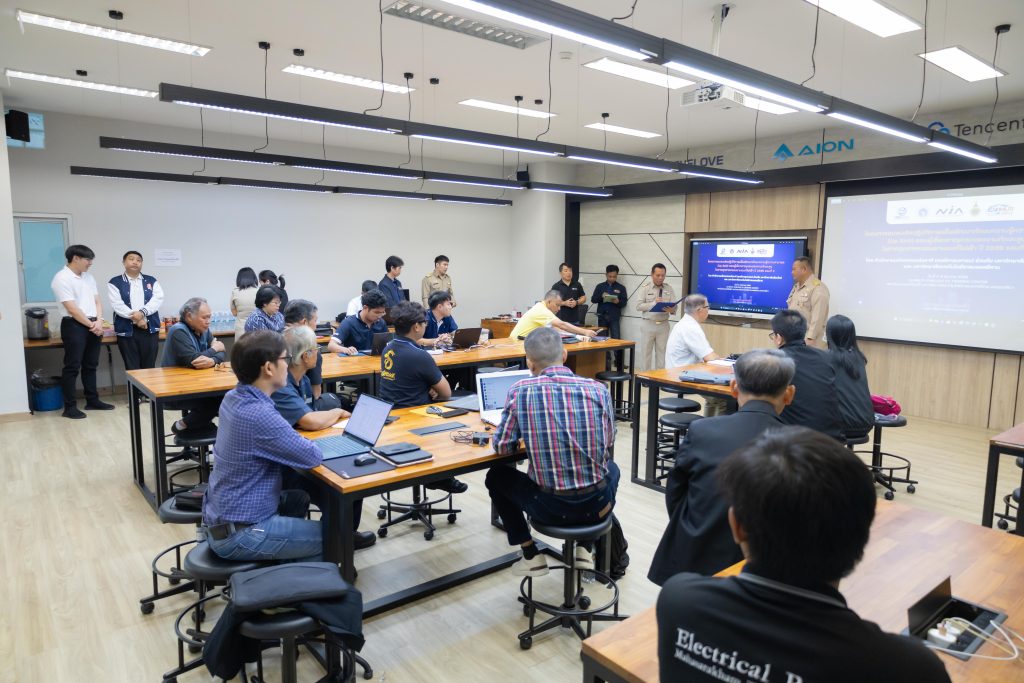
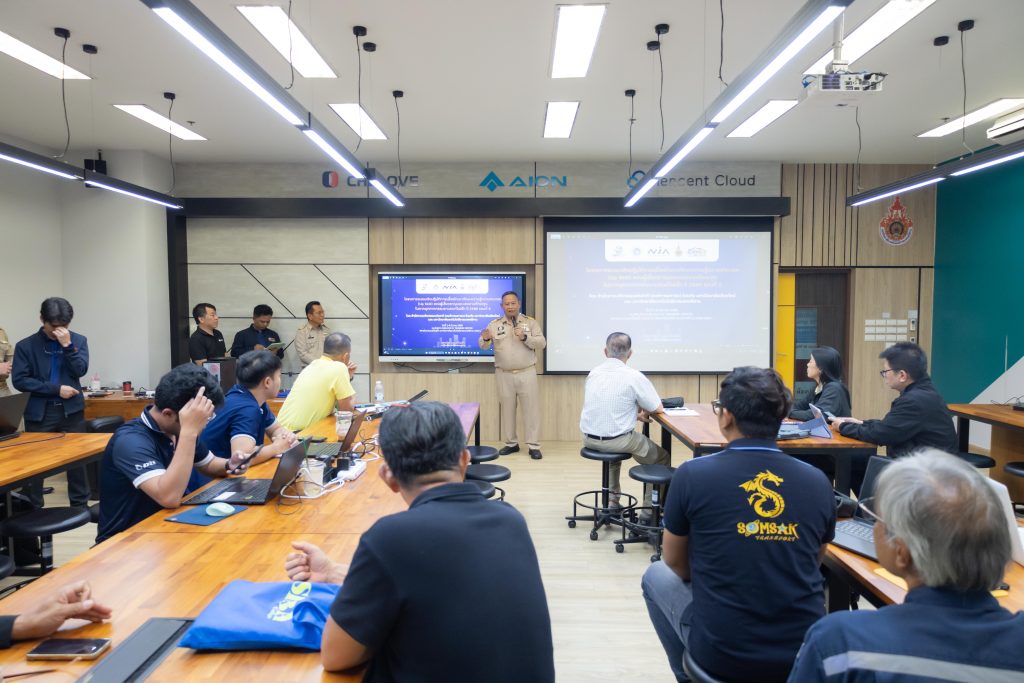
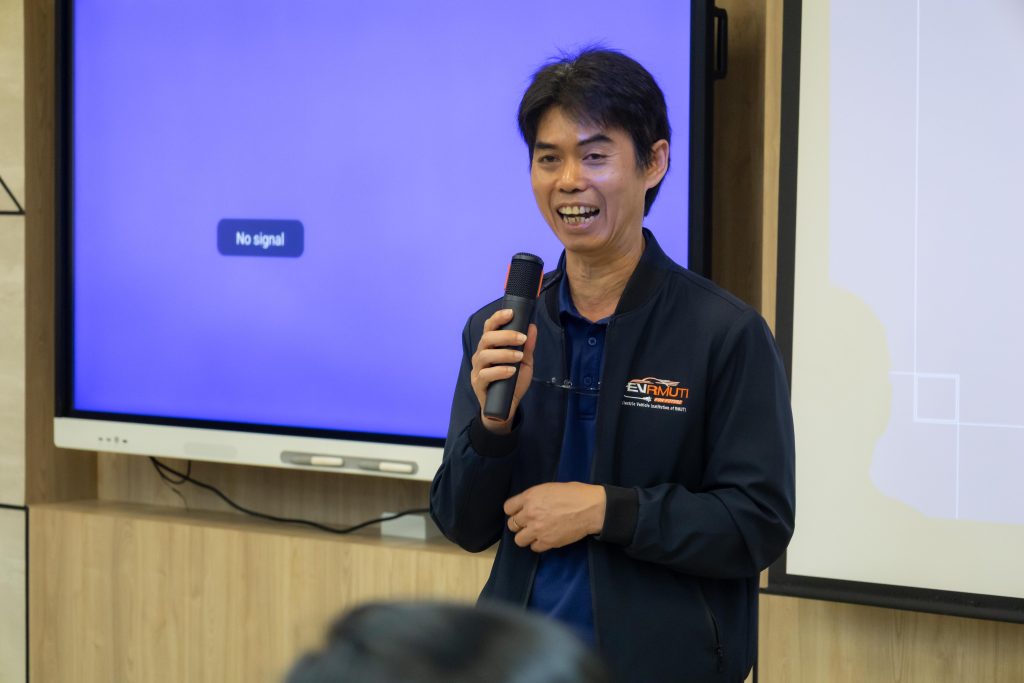
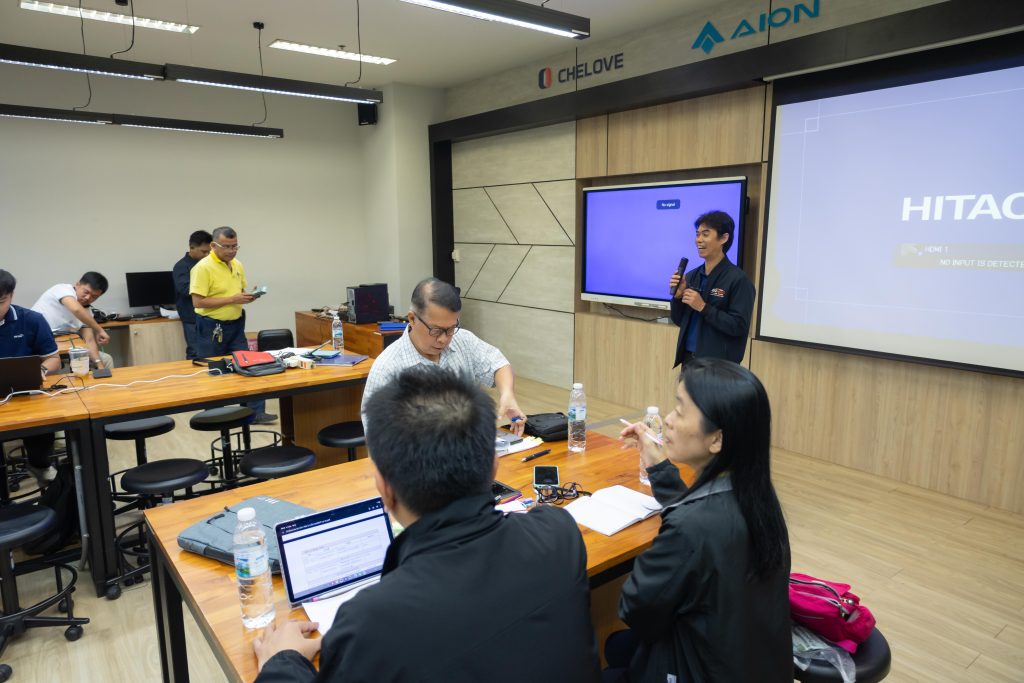
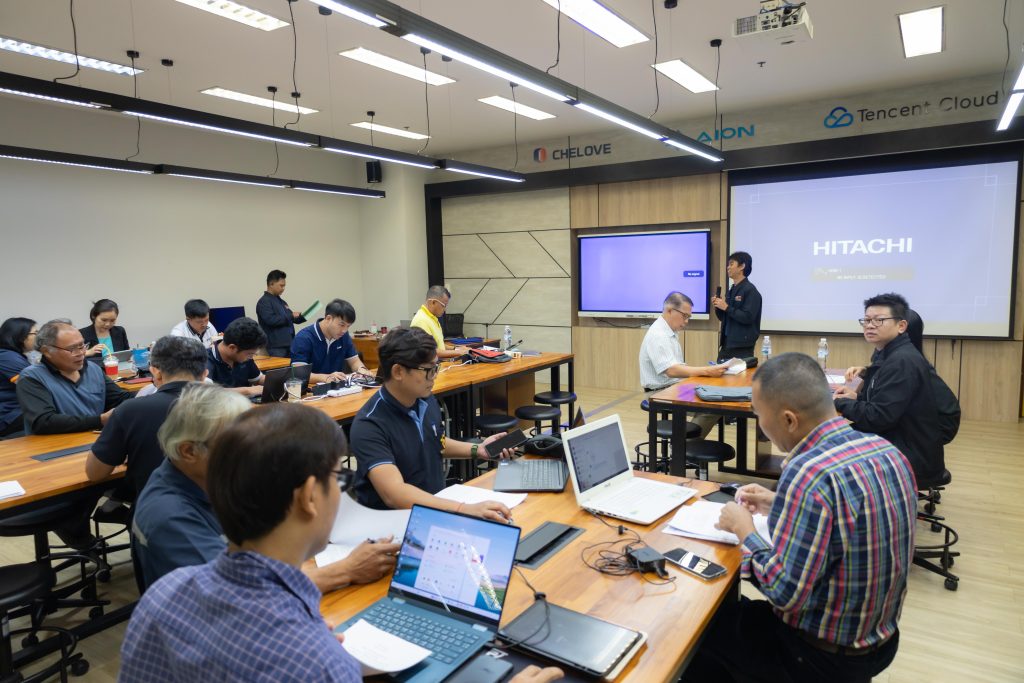
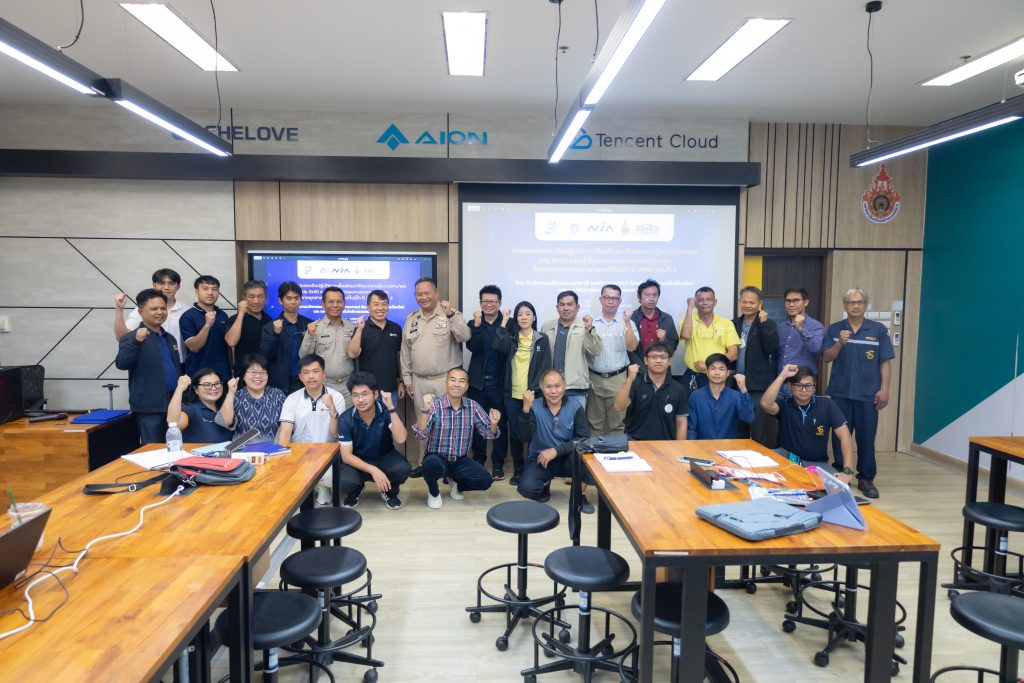
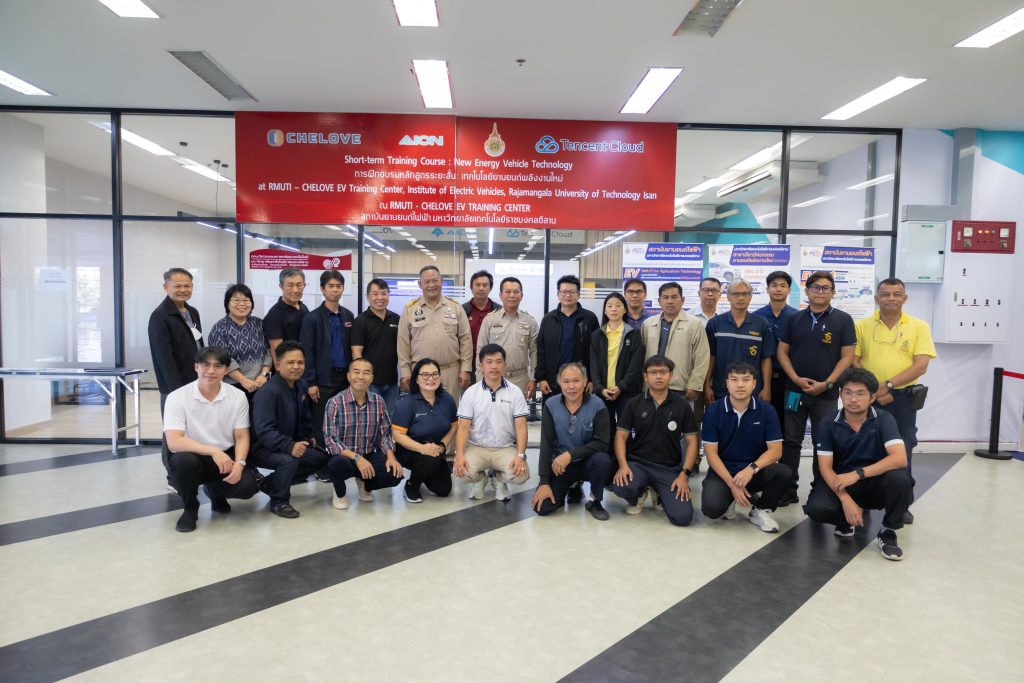
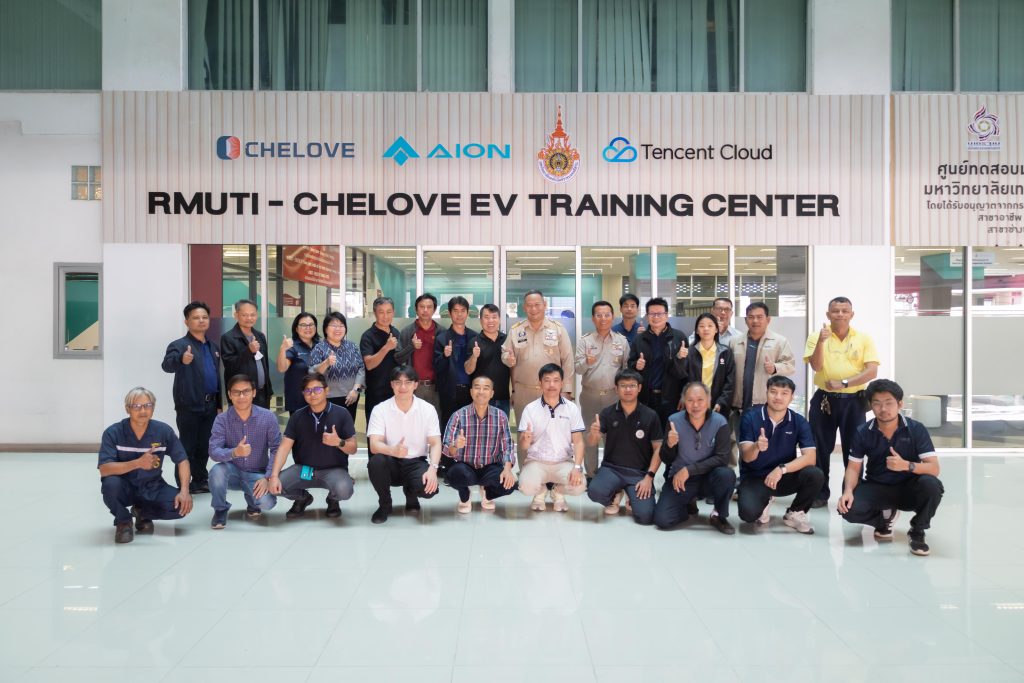
On March 2, 2569, the Electric Vehicle Institute, Rajamangala University of Technology Isan (RMUTI) , with the honor of having Associate Professor Dr. Kosit Sripootorn, the President of RMUTI, presiding over the opening ceremony, held a workshop to develop the skills and abilities (Up Skill) of experts and highly skilled workers in the electric vehicle industry in 2569, “Electric Vehicle Maintenance Course, 3rd Edition.” Also present were Assistant Professor Dr. Anek Charoenpakdee , Vice President for Strategy, Policy and Planning, overseeing electric vehicle strategy; Dr. Prachuab Inrawong, Assistant President and Director of the RMUTI Electric Vehicle Institute; Assistant Professor Dr. Rungpetch Kongnok , Vice Director for Student Affairs and Special Projects; and Mr. Kris T. Siriwatana , Vice Director for Academic Affairs, Research and Academic Services. They welcomed Assistant Professor Dr. Chana Yiengkamolsing, an expert lecturer in electric vehicles from Chiang Mai University, at the RMUTI-CHELOVE EV TRAINING CENTER, Electric Vehicle Institute, Nakhon Ratchasima Province.
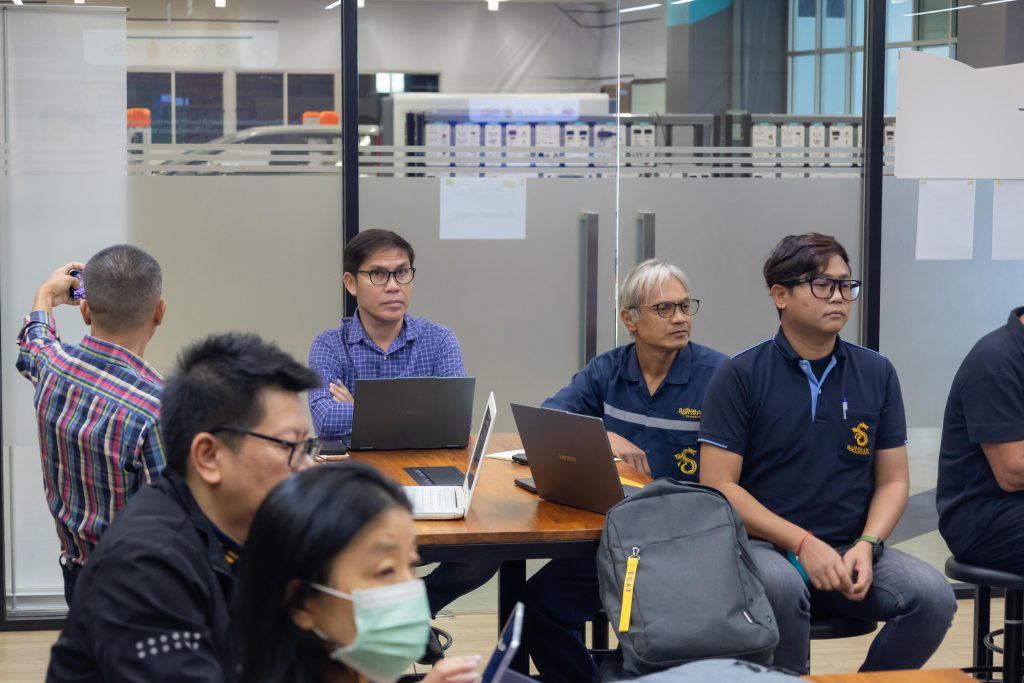
This training was conducted in collaboration between Chiang Mai University and Rajamangala University of Technology Isan to expand training to the Northeast region, with support from the National Innovation Agency (NIA). The aim is to enhance the capabilities of Thai entrepreneurs to adapt to the rapid transition to the electric vehicle (EV) industry, which is growing both domestically and globally. The training, held from March 2-6, 2569 (5 days), involved 25 participants from various regions across the country. These participants were selected based on eligibility criteria to receive advanced training and will subsequently disseminate, transfer, and further develop the knowledge gained in their respective areas. The participants are all entrepreneurs who recognize the opportunities and necessity of developing their businesses to align with EV technology. They represent a key target group with a direct role in driving the grassroots economy and the service sector of the country. The main objectives of the project are:
- The program aims to develop in-depth skills in electric vehicle maintenance for 25 entrepreneurs, enabling them to apply the knowledge to their businesses in areas such as problem analysis, maintenance, and safety system management.
- Strengthening confidence in expanding standardized services to support electric vehicles and building consumer trust.
- Prepare yourself for professional certification tests and upgrade to become a certified electric vehicle service center or repair shop in the future.
- To create a network of electric vehicle entrepreneurs in the Northeast region to foster collaboration, knowledge exchange, and joint business development.
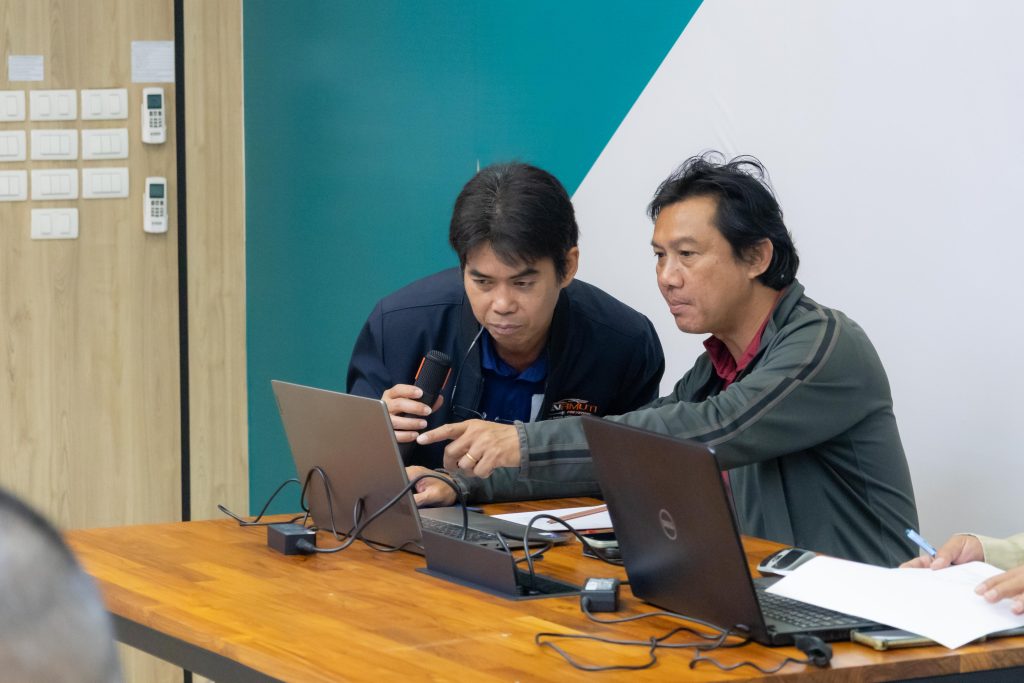
Throughout the five-day training, participants received both theoretical knowledge and practical training covering high-voltage electrical systems, battery systems, motors, inverters, the use of diagnostic tools, and post-warranty maintenance guidelines—critical aspects for long-term business operations.
Furthermore, the project encourages trainees to apply for knowledge tests at the Institute of Skills Development 5, Nakhon Ratchasima, at levels 1 and 2. The university invited officials from the institute to explain the application criteria and opened registration for the tests within the project, in order to concretely push employers towards adopting professional standards.
This project aligns with Rajamangala University of Technology Isan's development strategy to become an innovative university that meets the needs of future industries and upgrades high-skilled human resources. It also aligns with the Ministry of Higher Education, Science, Research and Innovation's (MHESI) strategy for producing and developing advanced human resources to support target industries, and is linked to the national strategy for enhancing competitiveness and developing and strengthening human resources to propel Thailand towards an innovation-based economy. The university plans to conduct relevant training courses for entrepreneurs during May and June 2026.
The Electric Vehicle Institute and the organizers are confident that these 25 entrepreneurs will be a vital force in applying the acquired knowledge to develop their businesses and will be key drivers in propelling the electric vehicle industry in the region and the country towards standardized, stable, and sustainable growth.
News / by Panitpicha Buwarachadecha